Drunk at Istanbul Airport: The Fine and When It Becomes a Crime
Drunk and loud at Istanbul Airport? How the misdemeanour fine works, being kept under control until sober, challenging it, and when it becomes a crime.
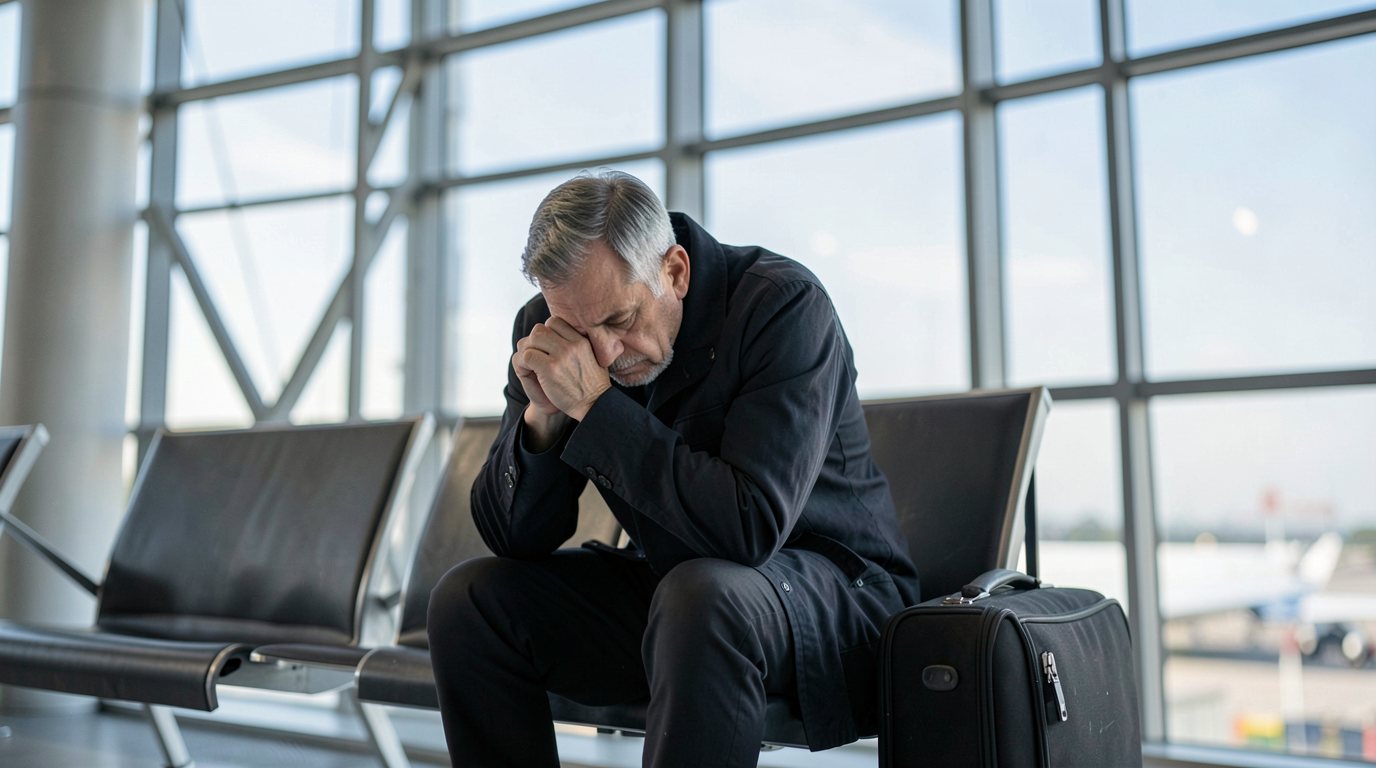
A traveller has a few drinks in the lounge, or more on the flight, and by the time they are walking through the terminal the mood has changed. A delay, a lost bag, a missed connection or an argument with a companion turns into shouting. Other passengers complain, and the police arrive. The questions that follow are practical ones: is it an offence to be drunk at the airport, will there be a fine, can the police hold me, and could this turn into a criminal case that follows me after I fly home?
This guide answers those questions on the text of Turkish law. It explains the misdemeanour of drunken behaviour in the Law on Misdemeanours (Kabahatler Kanunu, Law No. 5326), the related misdemeanours of noise and disobeying an order, how the administrative fine is paid or challenged, and the point at which the same evening can become a criminal investigation under the Turkish Penal Code (TCK, Law No. 5237) and the Code of Criminal Procedure (CMK, Law No. 5271). It is general information, not advice on a particular case. What happens in a real file depends on its facts and on the assessment of the officers, the prosecutor and, if the matter reaches one, the court.
This guide is about behaviour in the terminal, on the ground. Conduct on board an aircraft, including the offence of preventing an aircraft from moving under TCK Article 223 and the captain's powers, is covered in our separate guide to a disruptive passenger arrested on landing in Istanbul. This guide does not cover airline rules on who may board a flight.
1. Being Drunk Is Not the Offence: Law No. 5326 Article 35
The starting point is the definition. Under Law No. 5326 Article 2(1), a misdemeanour (kabahat) is a wrongdoing for which the law provides an administrative sanction in return. It is a different category from a crime (suç), which is defined in the Penal Code and other criminal laws.
Law No. 5326 Article 35(1) — drunkenness (sarhoşluk). A person who, while drunk, behaves in a way that disturbs the peace and quiet of others is given an administrative fine by law enforcement officers (kolluk görevlileri). The person is also kept under control until the effect of drunkenness passes.
Three points follow from the wording.
First, the text does not punish being drunk as such. The element the law requires is behaviour that disturbs the peace and quiet of others. A traveller who has been drinking and is sitting quietly at a gate is not described by this sentence. A traveller who is drunk and shouting at other passengers, blocking a walkway or causing a disturbance in a seating area may be.
Second, the decision is taken by law enforcement officers, not by a court. The fine is an administrative sanction. A court becomes involved under this Law if the person applies against the fine (Section 3).
Third, the second sentence adds a measure that is not a fine: the person is kept under control until the effect of drunkenness passes. The sentence links the end of this measure to the effect of drunkenness passing, and does not set a fixed period. How the measure was carried out in a particular case is a question of the facts and of what the officers recorded.
The amount. Article 35 states a fixed amount of administrative fine. That figure is not today's figure. Under Law No. 5326 Article 17(7), administrative fines are applied increased every calendar year by the revaluation rate determined and announced under the Tax Procedure Law, effective from the start of each year. The amount is therefore set by law and revalued every year, and this guide does not quote a lira figure.
2. Noise, Disobeying an Order, and More Than One Misdemeanour
A loud evening in a terminal can raise more than one provision of Law No. 5326. Three are relevant here.
Law No. 5326 Article 36(1) — noise (gürültü). A person who causes noise in a way that disturbs the peace and quiet of others is given an administrative fine. Under Article 36(3), the decision on the fine is taken by law enforcement or municipal police officers (zabıta). Unlike Article 35, this provision does not require the person to be drunk.
Law No. 5326 Article 32 — acting against an order. Under Article 32(1), a person who acts against an order given lawfully by competent authorities for judicial procedures, or to protect public security, public order or general health, is given an administrative fine, and the decision is taken by the authority that gave the order. Article 32(2) is the important limit: the article can be applied only where the relevant law contains an express provision to that effect. Article 32 is therefore not a general rule for every instruction given in a terminal; whether it applies depends on another law referring to it.
Law No. 5326 Article 15 — more than one misdemeanour, or a misdemeanour that is also a crime. Under Article 15(1), where one act commits more than one misdemeanour and the definitions provide only for administrative fines, the heaviest administrative fine is given. Under Article 15(3), where an act is defined both as a misdemeanour and as a crime, a sanction can be applied only for the crime; where a sanction for the crime cannot be applied, the sanction for the misdemeanour is applied. This is the hinge between the first half of this guide and the second: once the facts amount to a crime, the case is dealt with as a crime.
3. Paying the Fine or Challenging It: Articles 17, 27, 28 and 31
A traveller who receives an administrative fine has two decisions to make: whether to pay, and whether to challenge. Law No. 5326 lets them do both.
Paying
Law No. 5326 Article 17(6). The public officer who imposes an administrative fine for a misdemeanour collects it immediately themselves if the person concerned consents. Where the relevant law does not set a payment period, the administrative fine is paid within one month of its notification. If it is paid within the payment period, a 25% reduction is made. Paying does not affect the person's right to apply for a legal remedy against the decision.
The last sentence matters for a traveller who wants to leave Türkiye with the matter settled but believes the fine was wrong: under Article 17(6), paying within the period and challenging the decision are not alternatives.
Challenging
Law No. 5326 Article 27(1). An application against an administrative fine may be made within fifteen days at the latest from the date of notification (tebliğ) or announcement (tefhim) of the decision, to the court the statute names: the sulh ceza mahkemesi. If no application is made within this period, the administrative sanction decision becomes final.
Law No. 5326 Article 27(2). If the period was missed because of force majeure (mücbir sebep), the application may be made within seven days at the latest from the date the cause ends. This application does not prevent the decision from becoming final, but the court may stop its enforcement.
Law No. 5326 Article 27(3). The application is made in person, by the legal representative or by a lawyer, with a petition given to the court. The petition is given in two copies.
Law No. 5326 Article 27(4). The petition sets out clearly the information about the administrative sanction decision and the evidence relied on against it; it also states the grounds of any force majeure that prevented a timely application.
Law No. 5326 Article 28(8). At the end of the examination, the court decides either to reject the application, because the decision is lawful, or to lift the administrative sanction decision, because it is unlawful.
Law No. 5326 Article 31(1). The application against an administrative sanction decision is not subject to a court fee. Under Article 31(2), the costs of the remedy and the attorney's fee are paid by the party whose application or defence is rejected.
For a traveller who has already flown home, Article 27(3) is the practical point: the application may be made by a lawyer, so being abroad does not by itself close the route. The fifteen-day period still runs from notification or announcement.

4. Misdemeanour or Criminal Case? The Two Routes Side by Side
The same evening can be handled on one of two routes. The table sets out the text of the law for each; which route applies is decided on the facts.
| Point | Misdemeanour (Law No. 5326) | Criminal offence (TCK and CMK) |
|---|---|---|
| What it is | A wrongdoing for which the law provides an administrative sanction (Art. 2(1)) | An offence defined in the Penal Code, for example injury (TCK 86), insult (TCK 125) or resisting an officer (TCK 265) |
| Who decides | Law enforcement officers for drunken behaviour (Art. 35(1)); law enforcement or municipal police officers for noise (Art. 36(3)) | The prosecutor investigates; if an indictment is filed, the criminal court decides |
| Sanction | Administrative fine, revalued every year (Art. 17(7)); for drunkenness, also being kept under control until the effect passes (Art. 35(1)) | The penalty range written in the offence, for example one year six months to three years for TCK 86(1), three months to two years or a judicial fine for TCK 125(1) |
| Nature of the result | An administrative sanction decision | A court judgment in a criminal case; record rules are set by separate legislation not covered here |
| Paying | Within one month of notification, 25% reduction if paid in time; paying does not affect the right to challenge (Art. 17(6)) | The penalty is imposed by the court's judgment; Art. 17(6) of Law No. 5326 concerns administrative fines |
| How to challenge | Application to the sulh ceza mahkemesi within fifteen days of notification or announcement (Art. 27(1)), by petition in two copies (Art. 27(3)), no court fee (Art. 31(1)) | Defence rights in the investigation (CMK 147) and the legal remedies in the Code against the court's decision |
| Role of alcohol | Being drunk is part of the misdemeanour in Art. 35(1), together with disturbing behaviour | Alcohol taken voluntarily does not exclude punishment (TCK 34(2)) |
| Where both apply | A sanction can be applied only for the crime; the misdemeanour sanction applies where the crime sanction cannot be applied (Art. 15(3)) | The criminal file proceeds |
5. When the Evening Becomes a Criminal Case
Article 35 of Law No. 5326 describes drunken behaviour that disturbs others. Intentional injury, force or threats against an official, and insult are defined as crimes in the Penal Code, and under Article 15(3) of Law No. 5326, where an act is both a misdemeanour and a crime, a sanction can be applied only for the crime. This section sets out the provisions most likely to be raised in a terminal incident. Which provision applies, if any, is assessed by the prosecutor and, if a case is opened, by the court.
Alcohol is not a defence: TCK Article 34
TCK Article 34(1) provides that no penalty is given to a person who, because of a temporary cause, or because of alcohol or drugs taken involuntarily, could not perceive the legal meaning and consequences of the act, or whose ability to direct their behaviour in relation to the act was significantly reduced.
TCK Article 34(2) provides that the first paragraph does not apply to a person who commits an offence under the influence of alcohol or drugs taken voluntarily.
The consequence for a traveller is direct. Under Article 34(2), "I had been drinking" or "I do not remember" does not bring a person within the exclusion of punishment in Article 34(1) where the drinking was voluntary.
Injury: TCK Article 86
TCK Article 86(1). A person who intentionally causes pain to another person's body, or causes their health or perception to be impaired, is punished with imprisonment of one year six months to three years.
TCK Article 86(2). Where the effect of the intentional injury on the person is light enough to be removed by simple medical intervention, the penalty is imprisonment of six months to one year six months or a judicial fine, on the victim's complaint.
TCK Article 86(3)(c). Where the intentional injury is committed because of the public duty the person performs, the penalty is increased by half, without a complaint being required.
Conciliation (uzlaştırma) is relevant to injury. Under CMK Article 253(1)(b)(1), intentional injury is in the list of offences for which conciliation is attempted, except for TCK Article 86(3). An injury to an officer because of their duty falls under Article 86(3)(c), and so is outside that entry in the list.
Force or threats against an officer: TCK Article 265
TCK Article 265(1). A person who uses force or threats against a public official in order to prevent them from performing their duty is punished with imprisonment of six months to three years.
The elements in the text are force or threats, and the purpose of preventing the official from performing the duty. TCK Article 265(5) adds that if the aggravated consequences of intentional injury occur during this offence, the provisions on intentional injury are also applied.
Insult: TCK Article 125 and CMK Article 253(3)
TCK Article 125(1). A person who attributes to someone a concrete act or fact capable of offending their honour, dignity and reputation, or who attacks a person's honour, dignity and reputation by swearing, is punished with imprisonment of three months to two years or a judicial fine.
TCK Article 125(3)(a). Where insult is committed against a public official because of their duty, the lower limit of the penalty cannot be less than one year. Under TCK Article 125(4), where insult is committed publicly, the penalty is increased by one sixth.
CMK Article 253(3). Even where the investigation and prosecution depend on a complaint, conciliation cannot be used for the offence of insult (Article 125).
A traveller who swore at officers or at other passengers in a crowded terminal should know that, under CMK Article 253(3), the conciliation route available for some other offences is not available for insult.
6. If the Police Take a Statement: CMK Articles 147 and 202
If the matter moves from the misdemeanour route to a criminal investigation, the traveller may be asked to give a statement as a suspect. The Code of Criminal Procedure sets out what must happen.
CMK Article 147(1) provides, among other things, that when a suspect's statement is taken:
- The suspect's identity is established, and the suspect is obliged to answer questions about their identity truthfully (Art. 147(1)(a)).
- The offence attributed to them is explained (Art. 147(1)(b)).
- They are told that they have the right to choose defence counsel and benefit from their legal help, and that counsel may be present during the statement; if they cannot choose counsel and want one, counsel is appointed by the bar (Art. 147(1)(c)).
- A relative of their choice is informed without delay that they have been apprehended, subject to Article 95 (Art. 147(1)(d)).
- They are told that they have the legal right not to make a statement about the offence attributed to them (Art. 147(1)(e)).
- They are reminded that they may ask for concrete evidence to be collected to clear the suspicion, and are given the opportunity to remove the grounds of suspicion and put forward points in their favour (Art. 147(1)(f)).
- The statement is recorded in a written record, which states among other things whether the steps above were carried out, and that it was read and signed; if the person refuses to sign, the reasons are written (Art. 147(1)(i)).
CMK Article 202(1) and (3). Where a person does not know Turkish well enough to express themselves, the essential points are translated through an interpreter, and this rule also applies to suspects, victims and witnesses heard in the investigation stage; at that stage the interpreter is appointed by the judge or the public prosecutor. Under CMK Article 324(5), the costs of an interpreter appointed for a suspect who does not know Turkish are not counted as trial costs and are borne by the State Treasury.
A statement given while the effect of drink has not passed, without an interpreter, or without understanding what is being signed, may shape the whole file. Our guides to giving a statement at Istanbul Airport and to rights in police custody in Türkiye explain these steps in more detail.
7. Step by Step: What a Traveller Can Do
- Find out which route you are on. Ask whether you are being given an administrative fine under Law No. 5326 or whether a criminal investigation has started. The rules, the decision-maker and the remedies differ (Section 4).
- Keep your words and hands to yourself. TCK Article 265(1) is built on force or threats used to prevent an official from performing their duty, and TCK Article 125(3)(a) sets a higher lower limit for insult against an official because of their duty.
- Keep every document you are given. Note the date on which a fine decision was notified or announced to you: the fifteen-day period in Law No. 5326 Article 27(1) runs from that date.
- Decide on payment with the reduction in mind. Under Law No. 5326 Article 17(6), a fine paid within the payment period is reduced by 25%, and payment does not affect your right to challenge the decision.
- If you think the fine was wrong, apply in time. The application goes to the sulh ceza mahkemesi named in Article 27(1), by petition in two copies (Art. 27(3)), with the information about the decision and your evidence (Art. 27(4)); no court fee is charged (Art. 31(1)).
- If a statement is taken, use your rights. Ask for an interpreter (CMK Art. 202(3)) and for counsel (CMK Art. 147(1)(c)); you have the legal right not to make a statement (CMK Art. 147(1)(e)); read the record before signing it (CMK Art. 147(1)(i)).
- Do not build a defence on the drinking. Under TCK Article 34(2), alcohol taken voluntarily does not exclude punishment.
- If someone was hurt or an insult is alleged, take advice before discussing settlement. Conciliation is attempted for intentional injury other than TCK Article 86(3) (CMK Art. 253(1)(b)(1)), and cannot be used for insult (CMK Art. 253(3)).
- If you are leaving Türkiye, arrange for a lawyer. Under Law No. 5326 Article 27(3), an application against the fine may be made by a lawyer. The documents you were given are what a lawyer needs to see first.
If you or someone travelling with you has been fined or questioned after an incident at Istanbul Airport or Sabiha Gökçen, a lawyer can explain these rules in your language and look at the documents you were given. Guidance can start on WhatsApp. See also our pages on giving a statement (ifade) and criminal defence in Türkiye, and our guide to what happens at the police station after an airport arrest.
Frequently asked questions
Is it an offence to be drunk at Istanbul Airport?
Being drunk is not by itself the misdemeanour in Law No. 5326 Article 35(1). The text requires a person who, while drunk, behaves in a way that disturbs the peace and quiet of others. Where that element is present, law enforcement officers impose an administrative fine and the person is also kept under control until the effect of drunkenness passes.
Who imposes the fine for drunken behaviour, and how much is it?
Under Law No. 5326 Article 35(1), the administrative fine is imposed by law enforcement officers. The amount is set by the statute and, under Article 17(7), administrative fines are increased every calendar year by the revaluation rate, so the figure in the text of Article 35 is not the current amount.
Can the police keep me until I am sober?
Article 35(1) provides that the person who behaves while drunk in a way that disturbs others is also kept under control until the effect of drunkenness passes. The sentence links the end of the measure to the effect of drunkenness passing and does not set a fixed period. How the measure was carried out in a specific case depends on the facts and on what was recorded.
How long do I have to pay the fine, and is there a reduction?
Under Law No. 5326 Article 17(6), where the relevant law sets no payment period, the fine is paid within one month of its notification. If it is paid within the payment period, a 25% reduction is made. Paying does not affect your right to apply against the decision.
How do I challenge the fine, and can I do it after leaving Türkiye?
Under Law No. 5326 Article 27(1), an application may be made to the sulh ceza mahkemesi within fifteen days at the latest from notification or announcement of the decision; otherwise the decision becomes final. Under Article 27(3), the application is made in person, by the legal representative or by a lawyer, by petition in two copies, so a lawyer may file it for a traveller who has left Türkiye. Under Article 31(1), no court fee is charged for the application.
Can I say I was too drunk to know what I was doing?
Not where the drinking was voluntary. TCK Article 34(1) excludes punishment where alcohol or drugs were taken involuntarily and the person could not perceive the meaning of the act or direct their behaviour, but TCK Article 34(2) provides that this does not apply to a person who commits an offence under the influence of alcohol or drugs taken voluntarily.
When does a drunken incident become a criminal case?
When the facts amount to a crime, such as intentional injury (TCK Article 86), using force or threats against a public official to prevent them from performing their duty (TCK Article 265(1)), or insult (TCK Article 125). Under Law No. 5326 Article 15(3), where an act is both a misdemeanour and a crime, a sanction can be applied only for the crime. Which provision applies is assessed by the prosecutor and, if a case is opened, by the court.
Can an insult to an officer be settled by conciliation?
No. Under CMK Article 253(3), conciliation cannot be used for the offence of insult (TCK Article 125), even where the investigation and prosecution depend on a complaint. Under TCK Article 125(3)(a), where insult is committed against a public official because of their duty, the lower limit of the penalty cannot be less than one year.



This page is general information about Turkish law and procedure — not legal advice, and reading it does not create an attorney–client relationship. Laws and practice change and every case turns on its own facts, so please do not rely on it for your situation; speak with a lawyer first.
Related guides
All guides →Asked to Give a Statement (Ifade) at Istanbul Airport? Rights First
Asked to give a statement (ifade) at Istanbul Airport? What a statement is, who can take it, and your right to silence, a lawyer, and an interpreter — first.
8 min readCriminal defenceCriminal Investigation vs Prosecution in Türkiye: The Stages
Confused about where your case stands in Türkiye? A plain-English guide to the stages — investigation (soruşturma) by the prosecutor, the decision to prosecute, trial (kovuşturma), and appeal — and where your defence acts at each one.
9 min readPolice & custodyPolice Custody in Türkiye (Gözaltı): Your Rights Explained
Held in police custody (gözaltı) in Türkiye, or worried you might be? A plain-English guide to your right to silence, your right to a lawyer, and what happens next.
6 min readRelated service: Giving a Statement (İfade) or Under Investigation in Türkiye → · All airport legal services →
Speak with a lawyer
One message is all it takes. We answer 24 hours a day, every day of the year — for IST and Sabiha Gökçen.